

Are Personalised 3D Number Plates Worth the Investment?
For many drivers, the standard flat number plate is nothing more than a functional necessity, a dull plastic rectangle that does little for a vehicle’s character. However, for those who view their car as a reflection of personal taste, every detail counts. Personalised 3D number plates have transitioned from a niche enthusiast modification to a mainstream upgrade for anyone seeking a sharper, more premium finish. If you are weighing up whether the 3D plates investment is truly worth it, the answer usually lies in the balance between lasting durability and the immediate visual impact they provide.
Immediate Kerb Appeal and Aesthetic Value
The primary reason most owners choose to upgrade is the undeniable depth that 3D plates bring to a vehicle. Unlike standard printed plates, these use characters topped with a high-gloss polyurethane resin, creating a raised profile that catches the light differently from every angle. It is a subtle shift that moves a car away from looking like a standard dealership model and towards something more curated.
This visual distinction is particularly valuable for those who have invested in high-end paintwork or aftermarket styling. A flat, fading plate can often look out of place on a modern performance car or a luxury SUV. By choosing bespoke 3D plates, you ensure that the registration matches the rest of the vehicle’s premium aesthetic. It is about completing the look rather than just ticking a legal box.
When considering the value of 3D number plates, it is also worth noting how they sit on modern bodywork. Many owners ask, ‘Do 3D number plates work on curved bumpers?’ and the answer is that high-quality acrylic maintains its bond even on more aggressive vehicle lines. This versatility means you can achieve a flush, professional fit regardless of your car’s design.
Durability and the Long-Term Investment
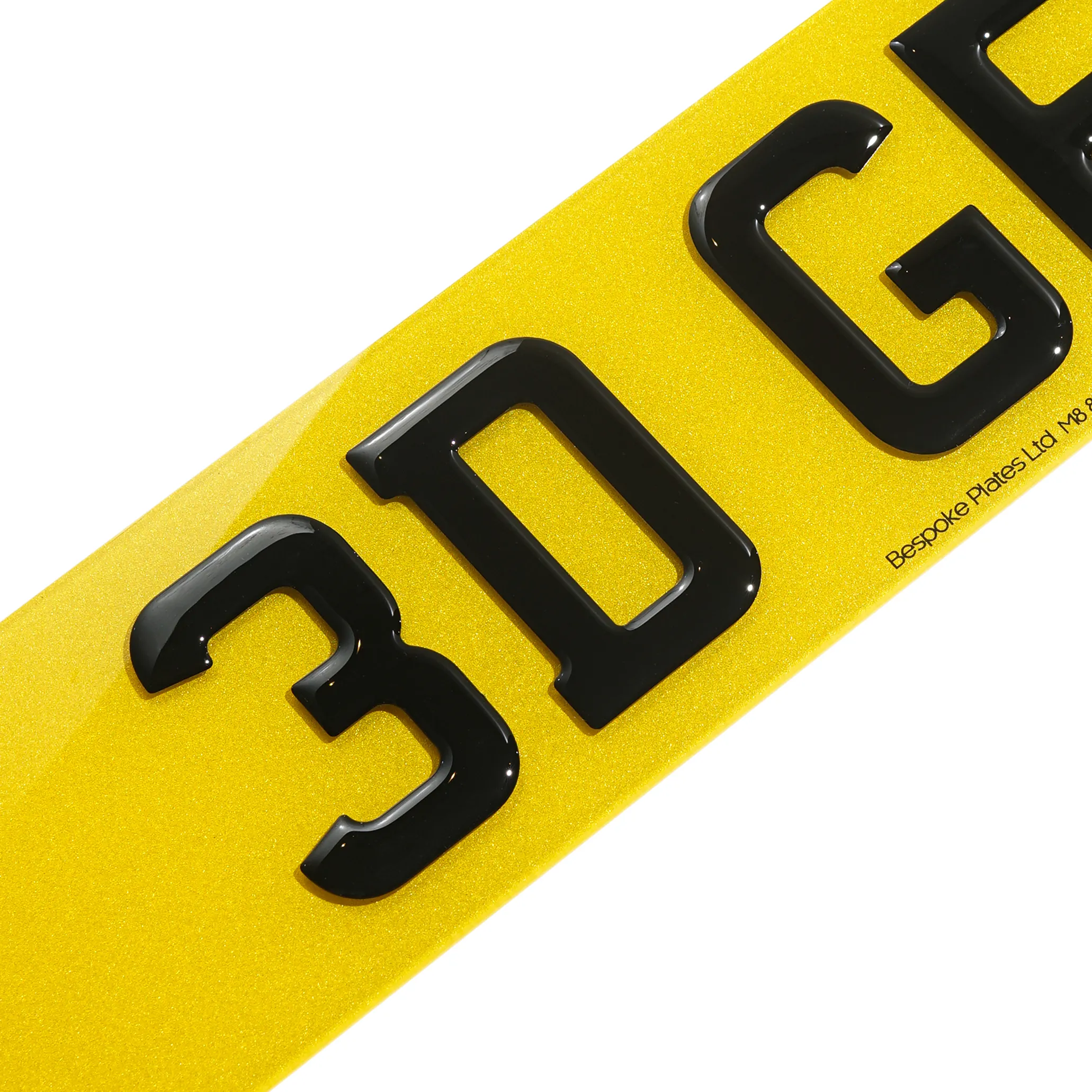
One of the quietest 3D number plate advantages is how they age compared to their standard counterparts. Printed plates are notoriously prone to delamination, where water ingress causes the reflective backing to peel away. Standard characters can also fade after a few years of UV exposure and harsh road salts. Premium 3D characters are designed to be resilient, maintaining their rich black finish and gloss for significantly longer.
If you are concerned about whether 3D number plates fade over time, the reality is that the resin dome acts as a protective layer against the elements. This makes the long-term 3D plate value much higher than a cheap set of plates that might need replacing every few MOT cycles. While the initial cost is higher, the replacement frequency is often lower.
Environmental resistance is a major factor for UK drivers who face everything from freezing winters to motorway grit. You might wonder, can 3D plates survive harsh weather without the resin cracking or the adhesive failing? When sourced from a reputable supplier, these plates are engineered to withstand pressure washers and temperature swings. This level of quality prevents common issues like 3D plates peeling, which is usually a sign of inferior materials rather than a flaw in 3D technology itself.
What Are These Plates Actually Made From?
Understanding what 3D number plates are made from helps clarify why they command a premium price. The base is an impact-resistant acrylic, while the characters are precision-cut and topped with a specialised gel resin. This is a far cry from the simple printing process used for standard plates. For many, the tactile quality and the weight of the product confirm that they are paying for craftsmanship rather than a gimmick.
Standard Plates vs 3D and 4D Options
In any cost vs. benefit analysis, you have to look at the alternatives. Standard plates are purely functional. When comparing 3D number plates vs standard plates, the difference is strictly about the transition from 2D to 3D. However, some drivers look even further ahead to 4D options which offer sharper, laser-cut edges.
Deciding what’s better, 3D or 4D number plate designs, often comes down to personal preference. 3D plates have a softer, rounded gel finish that feels more organic and refined. 4D plates are often more aggressive and structural. If you want something that stands out but retains a smooth, high-gloss look, 3D is usually the superior choice. You can explore the full bespoke plate range to see how these styles differ in person.
For those who want to push the aesthetic even further, options like the hex number plate shape provide a modern geometry that suits many performance cars. Even owners of zero-emission vehicles can join in, as electric car number plates are fully compatible with 3D and 4D styling, complete with the mandatory green flash on the side.
Staying on the Right Side of the Law

A common worry for those asking if custom plates are worth it is the fear of police intervention or MOT failures. The investment only makes sense if the plates are fully road-legal. Professional suppliers ensure that the fonts, spacing, and reflective properties meet all British Standards.
You may have heard rumours about whether 3D plates fail MOT assessments. This typically only happens if the plates are from a non-compliant supplier using illegal fonts or incorrect spacing. If you follow the number plate document requirements and use a registered supplier, your plates are perfectly legal for UK roads. Understanding why some 3D number plates fail MOT tests is essential; it usually boils down to poor manufacturing or the owner attempting to customise spacing in a way that breaks the law.
Another question frequently asked by high-mileage drivers is ‘Do 3D plates affect ANPR cameras?’ Rest assured, the raised characters are designed to be clearly readable by infrared cameras and traffic enforcement systems. Compliance is a key part of the value, as it gives you the look you want without the risk of a fine.
Choosing a Set That Lasts
When you are ready to make the move, it is worth looking at exactly what you want from your registration. Whether you are interested in bespoke 4D plates for a sharp edge or the classic rounded look of 3D, quality matters above all else. Reviewing the cheap vs premium 3D number plate debate shows that the lowest price often results in yellowing resin or characters that fall off in a carwash.
If you already have a private registration or you are looking for the best 26-reg private plates to pair with a new vehicle, the 3D finish acts as the perfect frame. For those with vintage tastes, retro plates offer a different kind of nostalgia, proving that personalisation isn’t just about modern trends.
To ensure your investment remains protected, familiarise yourself with the FAQ on plate maintenance. In the rare event of a minor mishap, it is useful to know if 3D plates can be repaired if damaged, though most owners find that the sheer toughness of the gel characters prevents issues in the first place. You can even browse accessories to ensure your new plates are mounted securely without drilling through the characters.
Ultimately, a set of 3D plates is a statement of pride. It shows that you care about the finer details of your vehicle. For many drivers, the satisfaction of seeing those raised, glossy characters every time they walk up to their car is more than enough to justify the cost. If you have questions about specific styles or legalities, you can contact us to discuss your requirements. Exploring the best fonts and styles for 3D number plates is a great starting point for anyone looking to elevate their car’s presence on the road.


